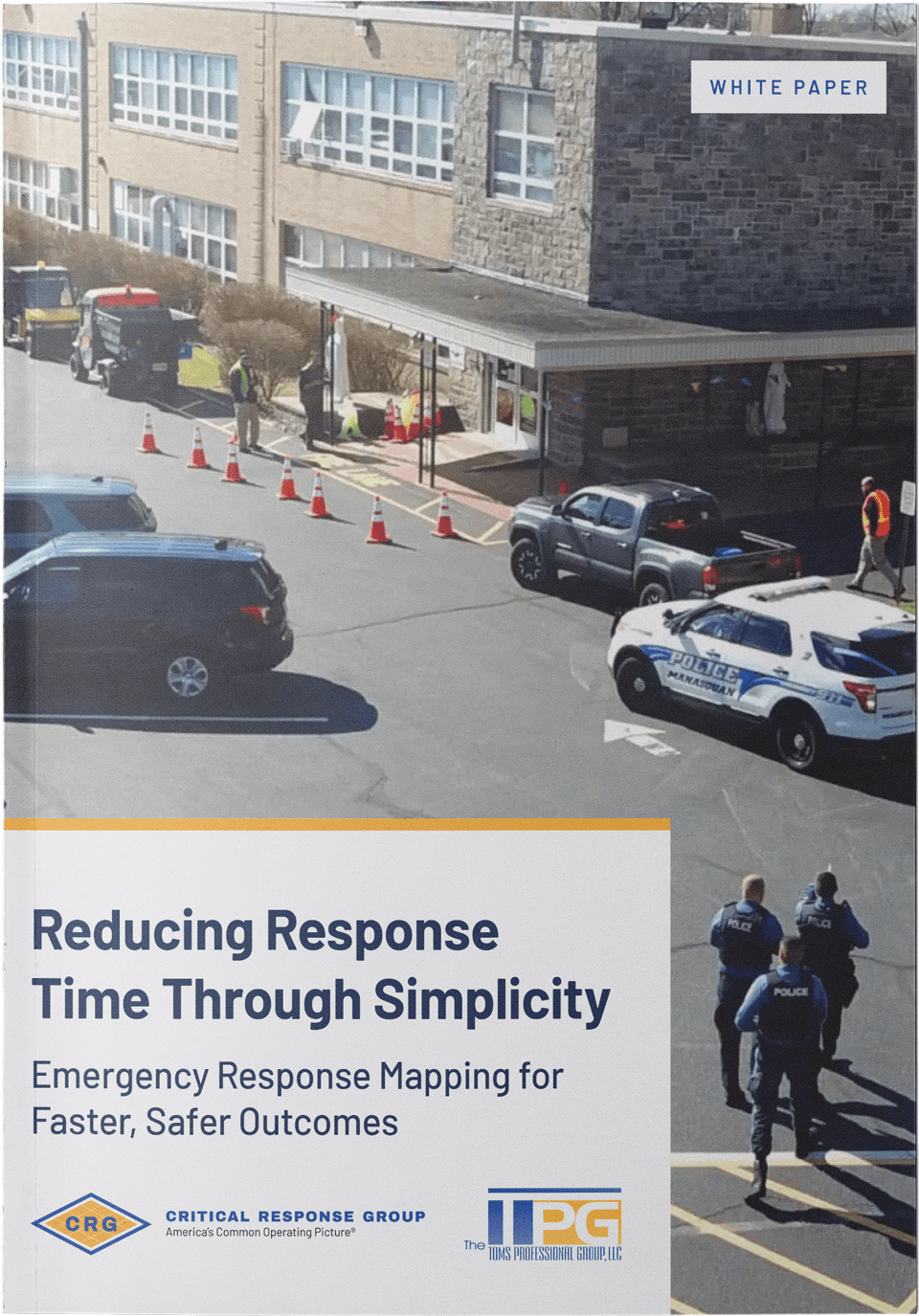
Why reducing complexity in the field is the key to faster, more effective emergency response.
In an increasingly complex threat environment, response time isn’t just a metric, it’s a matter of life and death. Yet too often, first responders are forced to navigate unfamiliar buildings, unclear dispatch information, or disjointed coordination during their most critical moments.
This white paper explores how complexity, not just distance or delays, slows down response and endangers lives. Drawing on high-reliability practices from the military and public safety sectors, Critical Response Group (CRG) offers a compelling approach to improving response effectiveness through simplicity, shared visuals, and real-world tested tools.
Whether you’re a public safety leader, emergency manager, or policymaker, this paper provides a framework for identifying the root causes of delay, and offers actionable strategies to close the gap between arrival and intervention.
”Variability is the enemy of effective response. When we remove guesswork, we gain speed, precision, and the ability to save lives.
What You’ll Learn in This White Paper:
- How complexity, not speed alone, creates deadly delays in emergency response
- Why shared visual tools like CRGs improve outcomes in high-risk environments
- What public safety agencies can learn from military operations and trauma care benchmarks