School safety is no longer just a law enforcement issue or a district responsibility. It is a shared mission that depends on strong coordination between schools, first responders, and emergency management partners. Whether the incident is an active threat, medical emergency, severe weather event, or infrastructure failure, outcomes are shaped long before the first call for help is made.
The most effective school safety programs are built on three fundamentals: clear communication, intentional collaboration, and realistic preparedness planning. When these elements are in place, schools and public safety agencies are better positioned to respond quickly, confidently, and in alignment when it matters most.
Why Communication and Collaboration Matter Before a Crisis
In an emergency, seconds count. Responding officers need immediate clarity around where to go, how to access a building, and who is in charge on scene. That clarity does not happen spontaneously. It comes from relationships, shared planning, and consistent communication established well in advance.
When school administrators and first responders work together regularly, emergency plans become living tools rather than documents that sit on a shelf. Roles are understood, terminology is aligned, and expectations are clear. This kind of pre-incident coordination reduces confusion, accelerates decision-making, and ultimately saves lives.
Recent school emergencies across the country have reinforced the importance of preparation. In multiple incidents, responders were able to act more decisively because they already had access to accurate facility information and had trained alongside school staff. These outcomes underscore a simple truth: preparedness is not theoretical. It is operational.
Tabletop Exercises: Turning Plans Into Practice
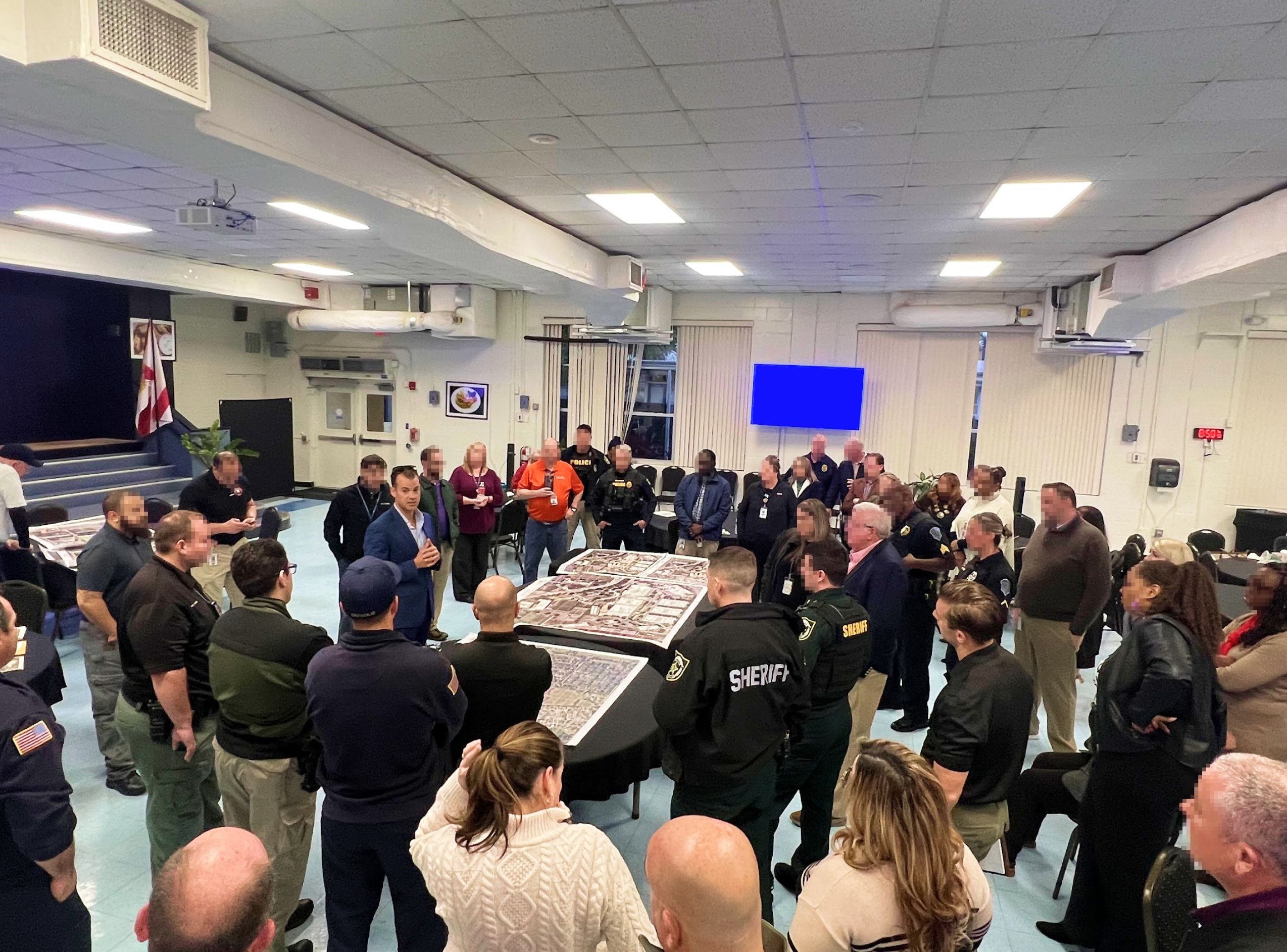
One of the most effective ways for school districts to strengthen preparedness is through Tabletop Exercises (TTX). These facilitated, scenario-based discussions allow school leaders and public safety partners to walk through realistic emergencies in a structured, low-risk environment.
Critical Response Group facilitates tabletop exercises. These exercises are modeled after pre-mission rehearsals used by U.S. Special Operations Forces. They are adapted specifically for schools and public safety agencies. These sessions are designed to test assumptions, reveal gaps, and improve coordination across agencies, not to grade performance.
A well-run tabletop exercise typically brings together district leadership, school administrators, local law enforcement, fire, EMS, and emergency management. Together, participants work through scenarios that address:
- Initial actions by school staff and responding officers
- Establishing command, staging areas, and secure perimeters
- Coordinating a multi-agency response across jurisdictions
- Implementing incident command and integrating outside resources
- Managing communications, notifications, evacuations, and reunification
The value of these exercises is not in getting every answer “right,” but in surfacing real-world challenges before they occur during an actual incident. Open dialogue helps teams refine procedures, align expectations, and ensure that everyone understands their role when a crisis unfolds.
The Role of Emergency Response Mapping
Preparedness also depends on access to accurate, standardized emergency response maps. During an incident, confusion over room names, entrances, stairwells, or building layouts can cause dangerous delays. Emergency response mapping provides a shared reference point so that school staff and responders are working from the same information.
Emergency response mapping has become a national priority, with legislation and statewide initiatives advancing across the country. For school districts, this reflects a growing recognition that traditional floor plans and legacy diagrams are not sufficient for emergency response.
When integrated into training and exercises, emergency response maps help improve situational awareness, speed navigation, and support coordinated decision-making. They are most effective when they are current, clearly labeled, and accessible to all responding agencies.
A Best-Practice Approach for School Districts
School districts that take a proactive approach to safety focus on more than compliance. They invest in relationships, training, and tools that support real-world response. Best-practice preparedness includes:
- Ongoing communication with local public safety partners
- Regular tabletop exercises and joint training
- Standardized emergency response maps accessible to responders
- Clear incident command and communication protocols
- Continuous review and improvement of emergency plans
By embedding these elements into their safety programs, districts create a stronger foundation for protecting students, staff, and first responders alike.
Moving Forward
There is no single solution to school safety, but there is a clear path forward. Collaboration, preparation, and shared understanding make a measurable difference when emergencies occur.
For school districts looking to strengthen their preparedness efforts, now is the time to engage public safety partners, test plans through realistic exercises, and ensure responders have access to accurate, actionable information. The work done today directly shapes outcomes tomorrow.
For more information on tabletop exercises, emergency response mapping, or school safety best practices, contact our team.